Key Advantages of Choosing a Trusted Rotary Gear Pump
In industrial operations, selecting the right pump is essential for maintaining smooth production, reliable fluid transfer, and consistent performance. Whether a business handles lubricating oil, diesel, bitumen, chemicals, or other compatible liquids, the right pumping solution can help improve process efficiency and reduce unexpected downtime.
A rotary gear pump is widely used in industrial applications because of its positive displacement mechanism, dependable flow, and ability to handle many viscous fluids. However, choosing a reliable pump from an experienced manufacturer is just as important as selecting the correct pump type.
1. Consistent and Reliable Fluid Transfer
One of the key advantages of a rotary gear pump is its ability to deliver a consistent flow when operated under suitable conditions. This makes it useful for processes that require controlled fluid movement and dependable transfer.
Industrial users can choose a suitable pump based on fluid viscosity, operating pressure, temperature, flow requirements, and system design. Correct selection helps support stable performance throughout regular operations.
2. Suitable for Different Industrial Applications
Different industries handle different types of liquids, so pump selection should match the specific application. A rotary gear pump is commonly considered for transferring oils, lubricants, fuels, and other compatible industrial fluids.
For example, a diesel transfer pump is used for appropriate fuel-transfer applications, while a lubrication gear pump supports the movement of lubricating oil in industrial systems. For hot, viscous materials such as bitumen, a bitumen jacketed gear pump may be suitable when its design and temperature ratings meet the process requirements.
Selecting the correct configuration helps businesses achieve reliable fluid handling without compromising equipment performance.
3. Options for Different Fluid Requirements
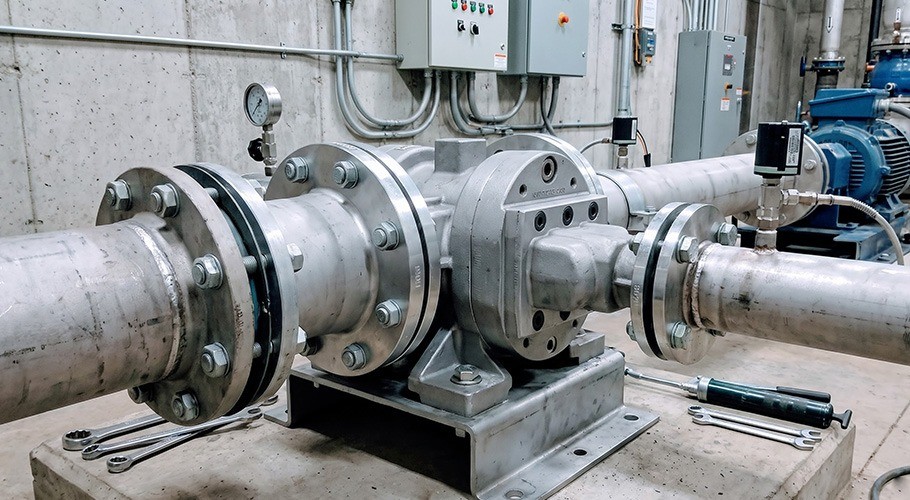
A trusted pump manufacturer can help identify the right design for a particular liquid and operating environment. Depending on the application, available options may include a stainless steel rotary gear pump, a rotary twin gear pump, or a double helical rotary gear pump.
A stainless steel rotary gear pump may be considered when material compatibility and corrosion resistance are important. Double helical designs may be appropriate for applications where their specific hydraulic characteristics meet the system requirements.
For food processing or chocolate transfer, businesses should select equipment specifically designed for the relevant hygiene, material compatibility, cleaning, and temperature requirements. A standard industrial pump should not automatically be assumed suitable for food-grade use.
4. Support for Industrial Efficiency
The right pump can contribute to efficient operations by matching flow capacity and operating conditions to actual process needs. Correct sizing, suitable materials, proper installation, and routine maintenance all play a role in dependable performance.
For example, selecting a pump with an appropriate capacity can help avoid unnecessary energy consumption or operation outside its intended range. Regular inspection of seals, bearings, clearances, and other wear components can also help identify maintenance needs before they cause significant disruption.
5. Reduced Downtime Through Proper Selection and Maintenance
Unexpected pump problems can interrupt production and increase maintenance costs. Choosing equipment that suits the fluid and working conditions helps reduce avoidable operating issues.
A reliable supplier should be able to provide technical guidance on pump specifications, fluid compatibility, installation, and maintenance. Buyers should also review the availability of spare parts, service support, operating limits, and product documentation before making a purchase.
These considerations are important when selecting a rotary gear pump for continuous industrial use.
6. Why Choose an Experienced Rotary Gear Pump Manufacturer?
Working with an experienced rotary gear pump manufacturer helps businesses compare available designs and select equipment based on their actual operating requirements. Instead of choosing a pump by name alone, buyers should consider the fluid being handled, required flow rate, pressure, temperature, material compatibility, and expected operating conditions.
JK Pump Industries offers different industrial pumping solutions for fluid transfer requirements. Explore the Rotary Gear Pump (JK), Stainless Steel Rotary Gear Pump (JKSS), Double Helical Stainless Steel Rotary Gear Pump (JKMS), and Bitumen Jacketed Gear Pump (JKRBJ) to review options for different industrial applications.
Choosing a trusted rotary gear pump involves more than comparing prices. The right pump should match the fluid, operating conditions, flow requirements, and maintenance expectations of the application.
By working with a knowledgeable manufacturer and following proper installation and maintenance practices, businesses can support reliable fluid transfer, improve operational consistency, and make informed long-term equipment decisions.
If you are planning to purchase an industrial gear pump, evaluate your application requirements carefully before selecting the most suitable model.